Symptom behavior
We ask what makes symptoms better or worse, whether symptoms are constant or intermittent, and whether they stay in the neck or travel toward the shoulder, arm, or hand.
Individualized Neck Pain Care
Neck pain may stay local, spread toward the shoulder or upper back, or occur with arm symptoms or headaches. At Nick Rinard Physical Therapy in Southwest Portland, near Multnomah Village, we look at your history, movement, function, and symptom response to help determine which findings are most useful for treatment.
The goal is to identify patterns that help guide care, improve function, and give you practical strategies you can use outside the clinic. Whether your concern is turning your head to drive, sitting through work, or getting back to exercise, tell us what you want to improve.
Meet our physical therapists or review insurance and payment information before requesting an evaluation.
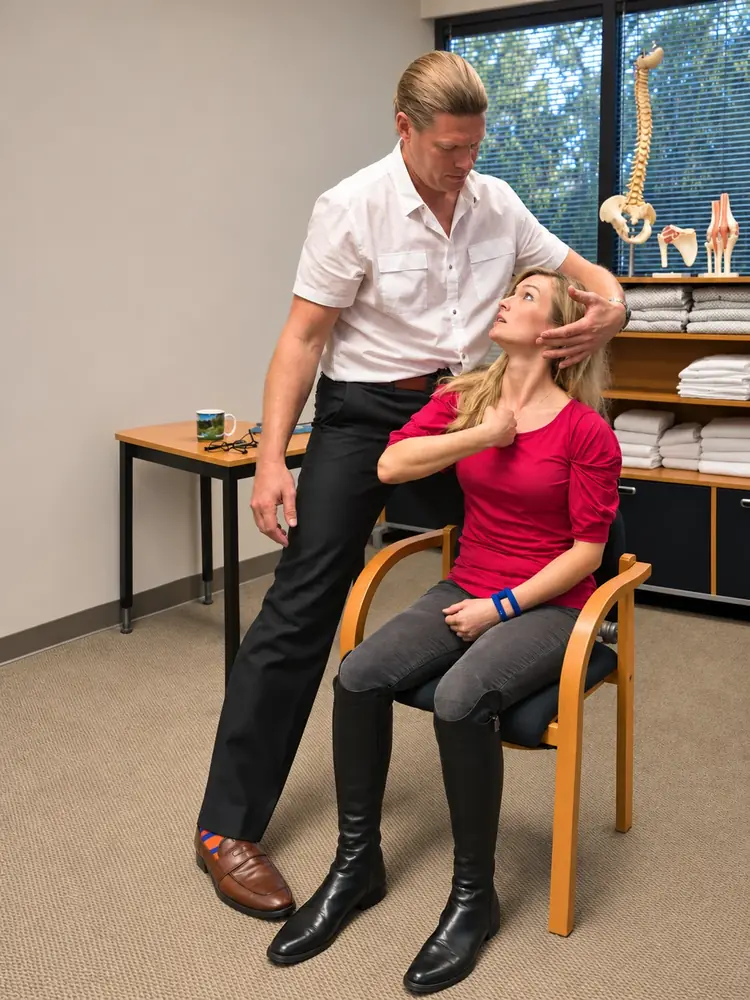
Neck pain is not always explained by one structure or one movement. We look for reproducible findings that help direct treatment.
We ask what makes symptoms better or worse, whether symptoms are constant or intermittent, and whether they stay in the neck or travel toward the shoulder, arm, or hand.
We assess cervical movement and may use repeated or sustained movements to see whether symptoms change in a consistent, clinically useful way.
We consider work, sleep, lifting, driving, exercise, desk posture, sports, and other activities that matter to you.
Our clinicians use principles from Mechanical Diagnosis and Therapy (MDT), also known as the McKenzie Method, when appropriate. MDT uses a structured mechanical assessment to examine how symptoms respond to movement, position, and loading.
That response can help guide an individualized plan rather than applying the same neck exercises to everyone.
Treatment depends on the evaluation and how your symptoms respond. We emphasize active care and clear self-management strategies.
Exercises or movement strategies may be selected based on the response seen during your assessment rather than a generic neck routine.
We may adjust positioning, work habits, sleep setup, lifting, or exercise temporarily when those factors are clearly influencing symptoms.
As symptoms and function allow, care can progress toward strength, tolerance, work demands, exercise, and the activities you want to return to.
Shoulder, arm, hand, tingling, or numbness symptoms can sometimes be influenced by the cervical spine. A physical therapy evaluation can help determine whether neck movement or loading appears to change those symptoms and whether physical therapy is an appropriate next step.
If your history or examination suggests that symptoms require medical evaluation rather than physical therapy alone, we will recommend the appropriate next step.
Our Southwest Portland clinic is at 9700 SW Capitol Hwy, Suite 140. You can view directions and clinic photos before your visit. Tell us what you want to do more comfortably, such as turning to check traffic, working at a computer, sleeping, or exercising. If symptoms followed an accident, bring any relevant medical instructions and contact our office about claim information.
Referral requirements can depend on your insurance or situation. See our referral information, or call our office and we can help you determine the next step.
Not everyone needs imaging before beginning physical therapy. Your history, symptoms, examination findings, and any prior medical work-up help determine whether additional evaluation is appropriate.
Some headache presentations can have a cervical or mechanical component, while others do not. The evaluation helps determine whether neck movement or position appears related to your symptoms.
Southwest Portland
Nick Rinard Physical Therapy is located at 9700 SW Capitol Hwy, Suite 140, Portland, OR 97219.