
What is MDT?
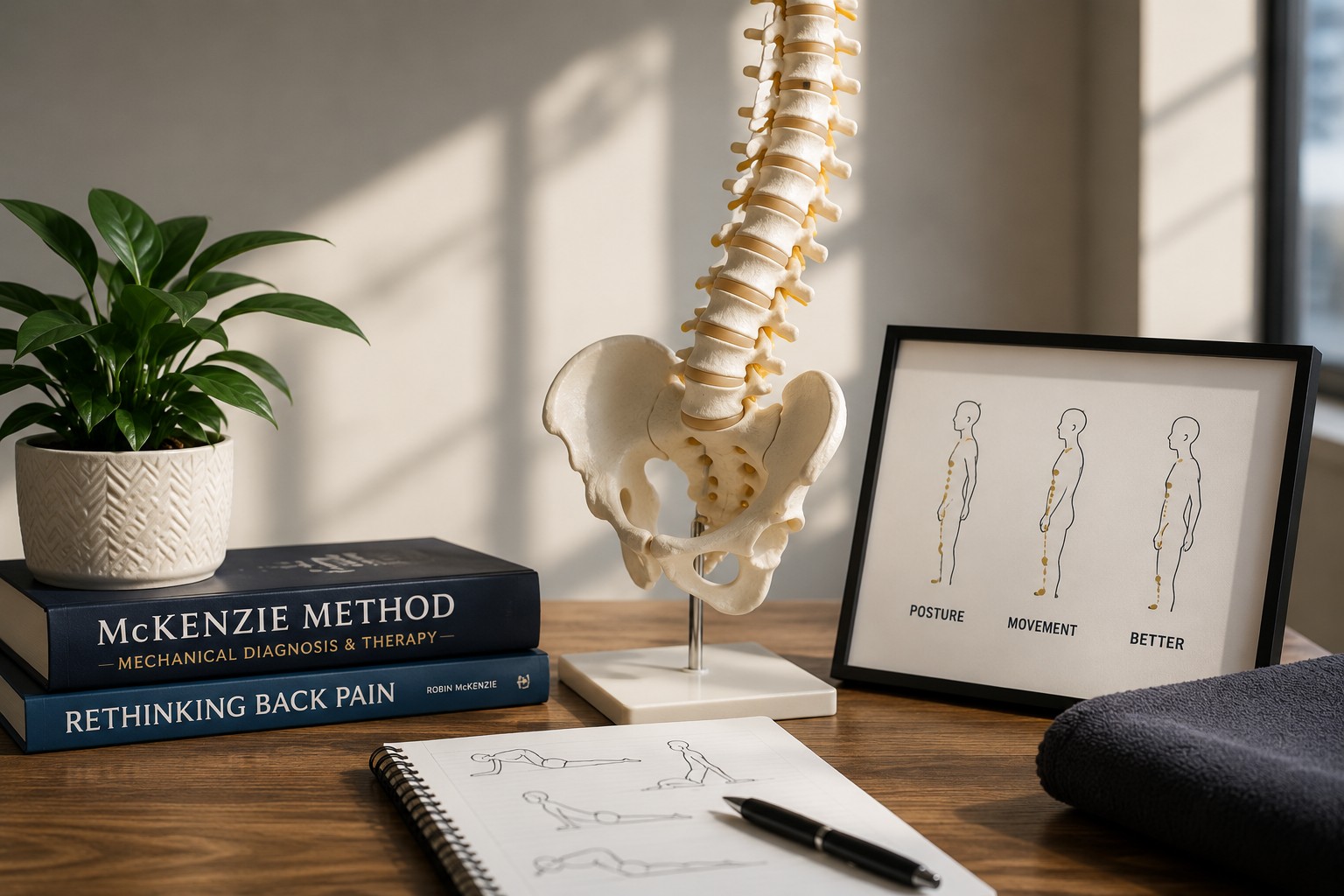
This article was written by Danya Sadler, Student Physical Therapist, during her clinical rotation at Nick Rinard Physical Therapy.
When I first started my clinical rotation, I had no clue what MDT stood for or entailed. As I have learned this method and been able to apply its concepts to many patients over the weeks I’ve been here, I can see just how valuable this method is and have seen the effectiveness of it.
MDT stands for “Mechanical Diagnosis Therapy” and can also be known as “The McKenzie Method”. The National Library of Medicine defines MDT as “a classification system for assessing and treating various musculoskeletal conditions, including lower back, neck, and extremity pain.” This method works by dividing patients into different groups by presentation of symptoms and response to repeated testing. These include Derangement, Dysfunction, Postural, Chemical, or Other. Instead of focusing only on where it hurts, MDT clinicians look for patterns to identify which movements help your pain improve and which make it worse. Once those patterns are found, specific exercises are used and advice is given to help reduce your pain and improve your movement. One of the main goals of MDT is to teach you how to manage your symptoms yourself. We can help you identify the movements that improve your pain, and you’ll use those exercises at home so you’re not relying solely on treatment in the clinic.
What to Expect During an MDT Assessment
During an MDT assessment, the physical therapist asks detailed questions about the patient’s symptoms and how they change. They will assess your posture, range of motion, and resisted strength to determine deficits and/or pain throughout. The clinician will then guide the patient through repeated or sustained movements to observe how the patient’s symptoms respond. This is what the physical therapist uses to determine the MDT category and treatment approach. Treatment is tailored to each patient and may include stretching, posture correction, or unloading/resting the involved area.
Why MDT Works
Research has shown that MDT is an effective treatment option for many people with back or extremity pain, especially when it is provided by a clinician trained in the full MDT assessment process. MDT offers the added advantage of allowing treatment to be individualized while encouraging greater self-management compared to many other interventions. Current clinical guidelines also recommend education, exercise, and active self-management, all of which closely align with the MDT approach.
At Nick Rinard Physical Therapy, this assessment process is used to help us understand how your individual body responds to movement rather than applying the same treatment for everyone.
Our goal is to reduce pain, improve function, and provide you with the knowledge and tools to confidently manage your symptoms independently.