By Nick Rinard MPT, Cert MDT
24 Sep, 2026
Clinical Case of the Week
exercise, Low Back Pain, MDT, Motor Vehicle Accident, MVA, neck pain, Nick Rinard, Nick Rinard physical therapy, pain-free, Physical Therapy, Portland Oregon, results, treatment
If you’re still in pain more than 6 weeks after normal “healing” time for MVA trauma, it is not too late for physical therapy to help.
Why Can Pain Continue After Healing?
As you know from the last Clinical Conversation update, healing tissue begins forming and changing in the first several weeks after trauma. If pain and stiffness continue, the injured tissues may still benefit from further remodeling and appropriately dosed movement and loading.
How Physical Therapy Helps Remodel Tissue
Tight or painful tissue can continue to adapt over time through targeted, mechanical, dosed loading. Physical therapy uses specific exercises and hands-on techniques as needed to gradually improve mobility, tolerance to load, and function.
Could a Joint Derangement Be Contributing?
Another possible source of persistent pain after an MVA is an underlying mechanical problem that has not yet been identified. Our MDT method uses repeated movement testing and the patient’s response to help identify mechanical patterns, including joint derangements, and guide treatment toward movements that reduce symptoms and improve function.
So, even if your accident happened months ago and your body has already gone through its initial healing process, it is not too late for physical therapy.
Come to Nick Rinard Physical Therapy to determine whether restricted tissue, a mechanical joint problem, or another musculoskeletal issue may still be contributing to your lasting pain.
More
By Erick Severo
18 Aug, 2026
Physical Therapy Tips
exercise, insurance, MDT, Motor Vehicle Accident, MVA, Nick Rinard, Nick Rinard physical therapy, pain, pain-free, Physical Therapy, Portland Oregon, results, treatment
A car accident can happen in seconds, but the soreness, stiffness, headaches, and difficulty moving that follow can linger much longer.
One of the tricky things about motor vehicle accidents is that pain doesn’t always show up immediately. Adrenaline and stress can mask symptoms initially, and it’s common to notice increased neck pain, back pain, headaches, stiffness, or difficulty with everyday activities in the hours or days following an accident.
At Nick Rinard Physical Therapy, we help patients recover after motor vehicle accidents and get back to moving, working, exercising, and living with confidence.
Common Problems After a Car Accident
Even relatively low-speed accidents can place significant stress on the body. Some of the most common symptoms we see include:
- Neck pain and stiffness
- Whiplash-related symptoms
- Low or mid-back pain
- Headaches
- Shoulder pain
- Difficulty turning your head while driving
- Pain with sitting or sleeping
- Muscle tightness and soreness
- Reduced mobility
- Difficulty returning to work, exercise, or normal activities
These symptoms can look different for every person, which is why your treatment shouldn’t be one-size-fits-all.
How Physical Therapy Can Help
Your first visit starts with a thorough evaluation to understand how your symptoms respond to movement, what may be contributing to your pain, and which movements help you feel and move better.
From there, we develop an individualized treatment plan that may include hands-on treatment, specific exercises, mobility work, strengthening, and education to help you manage your symptoms between visits.
Our goal isn’t simply to make you feel better temporarily. We want to help you regain your normal movement and function while giving you the tools to continue progressing on your own.
Don’t Wait for Pain to Become Your “New Normal”
After an accident, it can be tempting to assume the soreness will eventually disappear on its own. Sometimes it does but if pain, stiffness, headaches, or difficulty with normal activities are sticking around, having the problem evaluated can help you understand what’s happening and what you can do about it.
Whether your accident happened recently or you’ve been dealing with symptoms for a while, we’re happy to help determine the next step.
Injured in a Motor Vehicle Accident?
Nick Rinard Physical Therapy is accepting patients following motor vehicle accidents.
If you have questions about starting physical therapy, scheduling an evaluation, or using your auto insurance benefits for treatment, give our office a call. Our team can help you navigate the process and determine your next steps.
Call Nick Rinard Physical Therapy at (503) 244-6232 or email at help@rinardpt.com to schedule an evaluation.
Already know someone who was recently in an accident? Feel free to forward this message to them – we’d be happy to help.
More
By Erick Severo
20 Jul, 2026
Clinical Case of the Week
exercise, hip, knee, MDT, Nick Rinard, Nick Rinard physical therapy, pain, pain-free, Physical Therapy, Portland Oregon, post-op, prehab, rehab, results, shoulder, Surgery, treatment
This article was written by Danya Sadler, Student Physical Therapist, during her clinical rotation at Nick Rinard Physical Therapy.
What is Prehab?
Many people assume that physical therapy begins only after surgery, but postoperative rehabilitation is just one part of what physical therapists do. The American College of Surgeons defines prehabilitation, or “prehab,” as “a process of improving the functional capability of a patient prior to a surgical procedure so the patient can withstand postoperative inactivity and the associated decline.” Physical therapists accomplish this through targeted exercise, education, and movement strategies tailored to each individual.
What the Research Shows
Prehab is much more than simply “getting ready” for surgery, it gives patients the opportunity to improve strength, mobility, and confidence while working toward their best possible outcome. A growing body of research has shown that prehab is an effective way to make the most of that opportunity. A research article by Konnyu, et al. finds that prehab prior to total knee or total hip surgeries can lead to reduced length of stay in the hospital, increased strength, and decreased stiffness post-operatively. Another article looking at orthopedic surgeries found that “prehabilitation was associated with moderate improvement in several preoperative outcomes (function, 6-minute walk test, knee flexor and hip abductor strength, etc.) among patients undergoing all orthopedic procedures and was also associated with a reduction in back pain among patients undergoing lumbar surgery.” (Punnoose et al., 2023). The research behind this topic has been vastly growing over the years but all other articles shared similar findings. In some cases, the prehab process reveals something patients weren’t expecting: surgery may not be the right next step after all.
When Physical Therapy May Help Avoid Surgery
For many musculoskeletal conditions, current evidence supports physical therapy as a first-line treatment for many musculoskeletal conditions before considering surgery, as many patients achieve similar improvements in pain and function without an operation. This is not to say that surgeries are bad nor never warranted, because they are actually very well researched and helpful in many cases. By using physical therapy first however can help patients find a potential non-surgical way of improving function and reducing pain, or, if symptoms persist despite appropriate rehabilitation, physical therapy can help patients and their healthcare team determine that surgery is the most appropriate next step. Multiple randomized control trials and systemic reviews comparing supervised exercise therapy with arthroscopic surgery for degenerative meniscal tears have found similar improvements in pain and function, while the physical therapy group demonstrated greater improvements in muscle strength early in rehabilitation.
A Closer Look at Low Back Pain
Evidence supporting conservative care extends beyond meniscal injuries. Similar recommendations exist for conditions such as knee osteoarthritis, rotator cuff injuries, and more but I want to present some evidence about its use with patients with low back pain since we see many individuals with this at the clinic. While surgery for back pain is appropriate in certain conditions like progressive neurological deficits or required fusions, most episodes of low back pain improve with conservative care. Current clinical practice guidelines from JOSPT and the American College of Physicians recommend remaining active, participating in exercise-based rehab, and working with a physical therapist before considering surgical intervention when there are no red flags found by your clinician or your physical therapist. Physical therapy can decrease pain, improve mobility, increase strength, and also help patients return to their daily activities while determining whether surgery is truly necessary.
The Right Treatment at the Right Time
Ultimately, the goal of prehab isn’t to avoid surgery at all costs, it is to ensure that each patient receives the right treatment at the right time whether it be surgery on conservative care. If surgery is found to be the best next step, patients will benefit from becoming stronger, more informed, and more active participants in their own care.
Citations
American College of Surgeons. (n.d.). Prehabilitation. Strong for Surgery. Retrieved July 8, 2026, from https://www.facs.org/for-patients/preparing-for-surgery/strong-for-surgery/prehabilitation/
Konnyu KJ, Thoma LM, Cao W, Aaron RK, Panagiotou OA, Bhuma MR, Adam GP, Pinto D, Balk EM. Prehabilitation for Total Knee or Total Hip Arthroplasty: A Systematic Review. Am J Phys Med Rehabil. 2023 Jan 1;102(1):1-10. doi: 10.1097/PHM.0000000000002006. Epub 2022 Mar 12. PMID: 35302954; PMCID: PMC9464791.
Punnoose A, Claydon-Mueller LS, Weiss O, Zhang J, Rushton A, Khanduja V. Prehabilitation for Patients Undergoing Orthopedic Surgery: A Systematic Review and Meta-analysis. JAMA Netw Open. 2023;6(4). doi:10.1001/jamanetworkopen.2023.8050
Kise N J, Risberg M A, Stensrud S, Ranstam J, Engebretsen L, Roos E M et al. Exercise therapy versus arthroscopic partial meniscectomy for degenerative meniscal tear in middle aged patients: randomised controlled trial with two year follow-up BMJ 2016; 354 doi:10.1136/bmj.i3740
Qaseem A, et al. Noninvasive Treatments for Acute, Subacute, and Chronic Low Back Pain: A Clinical Practice Guideline from the American College of Physicians. Annals of Internal Medicine. 2017;166(7):514–530.
George, S. Z., Fritz, J. M., Silfies, S. P., Schneider, M. J., Beneciuk, J. M., Lentz, T. A., Gilliam, J. R., Hendren, S., Norman, K. S., et al. (2021). Interventions for the management of acute and chronic low back pain: Revision 2021. Journal of Orthopaedic & Sports Physical Therapy, 51(11), CPG1–CPG60. https://doi.org/10.2519/jospt.2021.0304
More
By Erick Severo
16 Jun, 2026
Clinical Case of the Week
exercise, MDT, Nick Rinard, Nick Rinard physical therapy, pain, pain-free, Physical Therapy, Portland Oregon, results, treatment
Written by: Danya Sadler, SPT
When Rib Pain Isn’t What It Seems
We had a patient this past week with a unique challenge. This patient had been fighting with a serious medical condition for the past couple months and had, a week before seeing us, started experiencing pain on their left lower ribs. This patient had great difficulty sleeping, rolling over, and generally moving around and wanted to see if this new symptom was related to the illness or if it had a mechanical component.
This visit was conducted via telehealth which is a great way for patients to be seen who either are living or travelling far away or people, like our patient in this article, who are homebound due to their illness or injury. This patient was told at the start of the visit that we were going to use this first visit to determine if there was a mechanical component to their rib pain and if there wasn’t, that we were going to help guide them to appropriate medical providers for further evaluation.
Using Movement to Find Answers
During this visit, it was difficult to conclude whether the rib pain was mechanical or visceral. The patient had tenderness around their left lower ribs, but also had right sided tenderness right underneath the ribs dealing more with internal structures. One notable finding was the patient experienced some pain relief when side-gliding to the right and side-bending to the right. Based on this response, we decided to have the patient perform these consistently over the next few days to see if this would relieve symptoms and help us conclude if this rib pain was indeed mechanically based.
An Unexpected Setback—and a Breakthrough
When we followed up with the patient a few days later, they reported an eventful week. Shortly after our initial evaluation, they went to the emergency room with severe rib pain and did not do their PT exercises at all. After testing negative for any illness related cause of her rib pain, she went home and then began performing the assigned movements consistently. They worked! The patient was happy to report that their pain had almost completely gone away! They were very grateful that we were able to provide the tools to reduce their pain and gave them hope even in these really difficult times that they were facing with their illness.
The Power of a Thorough Assessment
This case highlights the value of a thorough physical therapy evaluation, even when symptoms occur alongside a significant medical condition. Rather than making assumptions about the source of the patient’s pain, we used movement testing and symptom response to guide our clinical decision-making and determine the most appropriate next steps. By the patient’s second visit, their rib pain had improved dramatically, allowing them to move, sleep, and function more comfortably. Just as importantly, the patient gained confidence and clarity during a challenging time in their health journey.
More
Nick Rinard Physical Therapy will be closed Thursday January 1st 2026 and Friday January 2nd 2025.
If you are making a resolution to get healthier in 2026, Nick Rinard PT may be able to help.
Don’t allow pain to stand in the way of your goals!
Please do not hesitate to call 503-244-6232, leave a message or send an email to help@rinardpt.com while the office is closed the next few days.
Someone will be back in the office soon to return your phone call.
Thank you for choosing Nick Rinard Physical Therapy as your number one go to for physical therapy!
More

Merry Christmas from Nick Rinard Physical Therapy
Happy Holidays to all our wonderful friends and family from Nick Rinard Physical Therapy.
We hope that everyone is enjoying this holiday to rest, recover and enjoy time with all your loved ones.
Nick Rinard Physical Therapy will be closed from Wednesday Dec. 24, 2025 at 12:00 to Dec. 26st 2025.
Please feel free to email help@RinardPT.com or call 503-244-6232 for any needs you may have and someone will be in the office to give you a call back.
Cheers and wishing everyone all our best,
Nick Rinard Physical Therapy
More
We have all seen it, heard it, and even experienced it. 12-24 visits of Physical Therapy without results.
This is not the way physical therapy should be.
Patients should expect results at every visit- notice a change- see a path forward and a clear end to treatment.
“Nick is very professional and ethical.
Although I was approved for six visits, Nick felt that all progress to be made was accomplished in three visits.
This was very important to me.
He should be commended for business ethics.
Lastly, I am much better than when the PT started!”
Bob
More
“I had seen a previous PT for a few visits and didn’t feel any better – I thought my sprained ankle was a lost cause.
On my first visit with Dr. Rinard, he diagnosed my issue and provided immediate relief.
I had several PT appointments and felt constant improvement.
I’m back to running and playing volleyball and I could have done it without his help/patience/understanding and knowledge.
Thank you so much! ”
Gloria
More
By Krissy Brown
12 Nov, 2024
Clinical Case of the Week, Exercise
exercise, injured, Nick Rinard, Nick Rinard physical therapy, Oregon, pain-free, Portland Oregon, thera-band, treatment
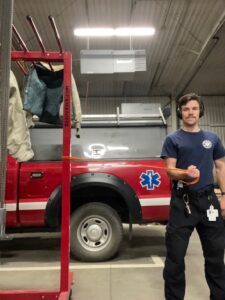
A Nick Rinard Physical Therapy patient emphasizes the importance of health and fitness in the the demanding role of a firefighter.
His home exercise plan is so convenient he can do it while he works!
Thank you for your service and courage you give to the community.
Thank you for sharing your Nick Rinard Physical Therapy story!
More
Nick Rinard Physical Therapy- where patients come to get results from physical therapy!
“I had lower back pain for the past 4 years & previous physical therapy visits & exercises only had temporary results.
After only 6 visits I can go back to my regularly scheduled daily HIT classes.
I’m so confident that if I had another pain issue in the future I can come back to Nick & get it fixed.”
Cara
More